
Navigating the Global Landscape of EMC Standards
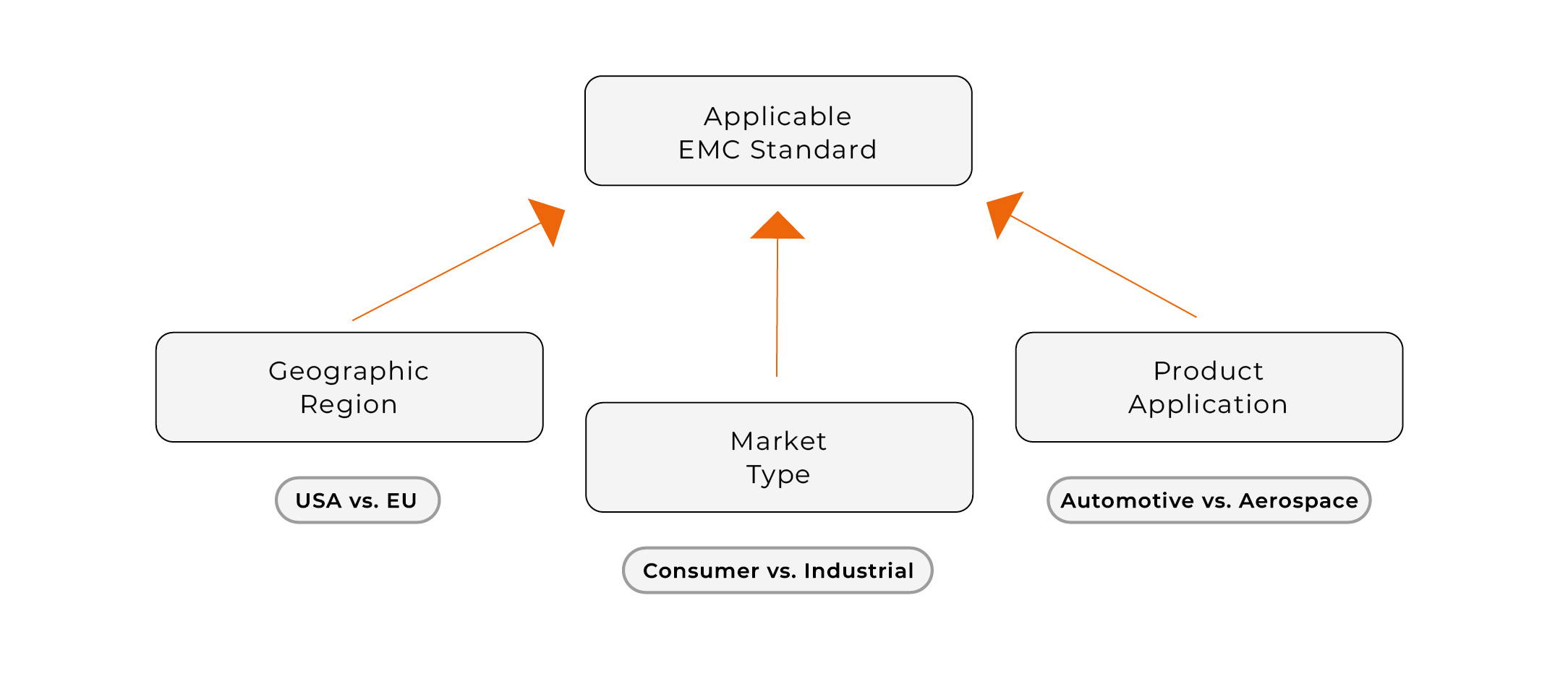 Electromagnetic Compatibility (EMC) standards vary significantly across the globe. A wide array of regulatory agencies and standards organizations are involved, making it challenging to determine which standards apply to a specific product in a given market.
EMC requirements typically depend on three key factors:
- Geographic region (e.g., United States vs. European Union)
- Market type (consumer, industrial, military, medical, etc.)
- Product application (e.g., automotive vs. aerospace)
For example, both the United States and the European Union maintain distinct EMC frameworks. Within each, standards are further segmented by device type and intended use. Determining the applicable EMC requirements often involves navigating a complex web of regional rules, industry-specific exceptions, and product classifications.
This guide provides a comprehensive overview of EMC standards worldwide, helping manufacturers identify the correct requirements for their target markets.
Finding the Right EMC Standards
EMC standards differ significantly by region, industry, and product type
Major frameworks include: FCC (USA), EMC Directive (EU), VCCI (Japan), CCC (China), RCM (Australia/NZ)
Four standard types exist: Basic, Generic, Product Family, and Product-Specific
Mutual Recognition Agreements (MRAs) streamline certification but don't harmonize standards
Finding the right standards requires consulting test labs, regulatory bodies, or researching similar products
Understanding EMC Standard Classifications
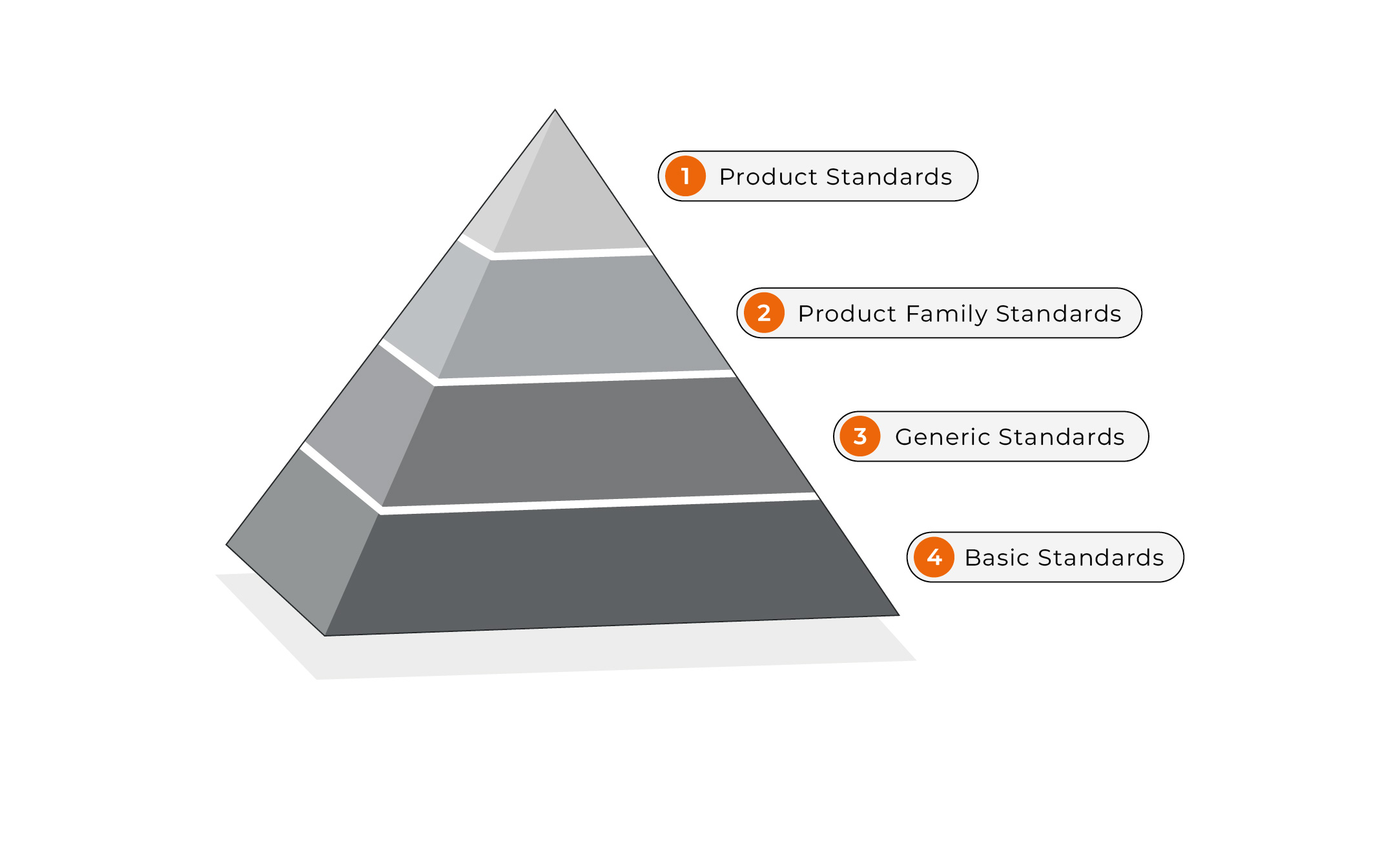
The Four Types of EMC Standards:
EMC standards are typically categorized into four hierarchical levels:
1. Basic Standards
Define fundamental terminology, measurement methods, and test procedures used across all EMC evaluations. These provide the foundation for all other standard types.
Examples:
IEC 61000-4 series (immunity test methods)
CISPR 16 series (measurement apparatus and methods)
2. Generic Standards
Apply to broad environments or applications without targeting specific product types. Used when no product-specific standard exists.
Examples:
EN 61000-6-3 (residential/commercial emission standards)
EN 61000-6-4 (industrial emission standards)
EN 61000-6-1 (residential immunity standards)
EN 61000-6-2 (industrial immunity standards)
3. Product Family Standards
Target groups of similar products with comparable EMC characteristics and operating environments.
Examples:
CISPR 32 (multimedia equipment)
EN 55011 / CISPR 11 (industrial, scientific, medical equipment)
CISPR 25 (automotive components)
4. Product-Specific Standards
Highly detailed standards for individual product types, with precise test methods, limits, and compliance criteria. These take precedence when available.
Examples:
EN 60601-1-2 (medical electrical equipment)
RTCA DO-160 (airborne equipment)
EN 50121 (railway applications)
How to Find the Right EMC Standards for Your Product
Identifying the correct EMC standards for a product may require multiple approaches:
1. Accredited EMC Test Laboratories
Labs operating in your target market and offering evaluation services for your device type can be an excellent starting point. These facilities maintain current knowledge of applicable requirements.
Important note: Lab expertise is typically technical rather than regulatory. They can guide you through the technical requirements but may not provide comprehensive market access advice.
2. Regulatory or Certification Bodies
Contacting the appropriate authority in the target region can help clarify requirements, though it may take effort to identify the correct agency.
Key regulatory bodies:
FCC (Federal Communications Commission) - United States
European Commission - Enforces the EMC Directive
ISED (Innovation, Science and Economic Development) - Canada
ACMA (Australian Communications and Media Authority) - Australia
MIIT (Ministry of Industry and Information Technology) - China
3. Market Research
Reviewing similar legally sold products can reveal which certifications are required. Product datasheets, compliance markings, and manufacturer declarations of conformity often provide useful clues about applicable standards.
EMC Standards by Country and Region
Global Overview
Different regions maintain distinct EMC frameworks with unique requirements and certification marks:
| Region/Country | Key EMC Standards | Compliance Mark | Regulatory Body |
| United States | FCC Title 47 Part 15, Part 18 | FCC mark | Federal Communications Commission |
| Canada | ICES (Interference-Causing Equipment Standard) | IC certification | ISED |
| European Union | EMC Directive 2014/30/EU, IEC 61000 series, CISPR standards | CE marking | European Commission |
United Kingdom | UK EMC Regulations (post-Brexit), aligned with EU | UKCA mark | Ofcom |
| Australia/New Zealand | RCM framework, adopts IEC standards | RCM mark | ACMA / RSM |
| Japan | VCCI standards, CISPR-based | VCCI mark | VCCI Council |
| China | GB standards (aligned with CISPR), CCC | CCC mark | SAMR / MIIT |
| India | BIS standards | BIS mark | Bureau of Indian Standards |
| Germany | VDE standards (harmonized with EU Directive) | VDE mark | VDE Institute |
Understanding Regional Differences
The EMC Directive 2014/30/EU establishes the legal framework for the European Union, requiring all electrical and electronic equipment to meet essential EMC requirements before market placement. Similarly, the Radio Equipment Directive (RED) 2014/53/EU covers wireless devices with additional spectrum-related obligations.
In contrast, the United States relies on FCC regulations which classify equipment as either Class A (industrial) or Class B (consumer), with Class B having stricter emission limits due to residential use proximity.
EMC Standards by Industry Sector
Industry-specific EMC standards address unique challenges and operating environments:
Industry Sector | US Standards | European / International Standards |
Consumer Electronics | FCC Title 47, Parts 2, 15 (Class B), 18 | EN 61000-6-3, EN 61000-6-1, CISPR 32 |
Commercial Equipment | FCC Title 47, Parts 2, 15 (Class B) | EN 61000-6-3, EN 61000-6-1 |
Industrial Electronics | FCC Title 47, Parts 2, 15 (Class A) | EN 61000-6-4, EN 61000-6-2, CISPR 11 |
Medical Devices | Aligned with international standards | EN 60601-1-2 (adopted globally) |
Automotive | SAE J1113 series, ISO 7637 | CISPR 25, ISO 11451/11452, UNECE Regulation 10 |
Military & Defense | MIL-STD-461 | DEF STAN 59-411, NATO STANAG |
Aerospace | RTCA DO-160 | EUROCAE ED-14, varies by region |
Railway | FRA regulations | EN 50121 series |
Marine | USCG requirements | IEC 60533, EN 60945 |
Industry-Specific Considerations
Medical device EMC standards (EN 60601-1-2) are particularly stringent due to patient safety implications. This standard is widely adopted globally, making it a de facto international requirement.
Automotive EMC standards must address both vehicle-level and component-level requirements, with CISPR 25 covering component emissions and ISO 11451/11452 addressing vehicle immunity.
Military standards like MIL-STD-461 are significantly more rigorous than commercial standards, reflecting harsh operational environments and mission-critical applications.
Mutual Recognition Agreements (MRAs)
Streamlining International Market Access
Many countries participate in Mutual Recognition Agreements (MRAs), which streamline market access by allowing mutual acceptance of test results and certifications from accredited laboratories.
Key benefits of MRAs:
Reduced duplicate evaluation requirements
Lower certification costs for multi-market products
Faster time to market across participating regions
Acceptance of test reports from accredited foreign laboratories
Important Limitations:
MRAs do not imply harmonization of standards. This is a critical distinction that manufacturers must understand.
For instance:
The U.S. and EU have an MRA in place, yet their EMC standards remain distinct
Products must still meet different technical requirements for FCC vs. EMC Directive compliance
Separate test reports may be required even if the same laboratory conducts evaluations
Different conformity assessment procedures may apply despite mutual recognition
The EU-US MRA covers certain product categories but requires careful navigation of both FCC regulations and the EMC Directive requirements separately.
Häufig gestellte Fragen
What are EMC standards?
EMC standards are technical specifications that define acceptable levels of electromagnetic emissions from devices and required immunity to external electromagnetic disturbances. These standards ensure electronic equipment can operate in their intended environment without causing or experiencing harmful interference.
Which EMC standards apply to my product?
The applicable EMC standards depend on three factors: geographic market (where you'll sell), industry sector (consumer, medical, automotive, etc.), and product type. Start by identifying your target markets, then consult the EMC Directive for Europe, FCC regulations for the US, or regional equivalents for other markets.
What's the difference between the EMC Directive and EMC standards?
The EMC Directive (2014/30/EU) is the European legal framework that mandates EMC compliance, while harmonized standards (like EN 61000 series, CISPR standards) provide the technical specifications for meeting those legal requirements. Compliance with harmonized standards creates a presumption of conformity with the Directive.
Do I need separate testing for FCC and CE marking?
Often yes, because FCC and EU requirements differ technically. However, if tested at an accredited laboratory covered by the US-EU MRA, you may be able to use the same test data with appropriate report formatting for each region. Consult with your laboratory about multi-market approaches.
What are harmonized standards?
Harmonized standards are European standards (typically EN versions of IEC or CISPR standards) that have been officially recognized by the European Commission. Compliance with harmonized standards provides a presumption of conformity with the essential requirements of the EMC Directive, simplifying the CE marking process.
Can I self-certify EMC compliance?
In some regions, yes. The European EMC Directive allows manufacturers to self-declare conformity based on their own assessments and test reports. The FCC also permits self-certification for many product categories. However, manufacturers remain legally responsible for compliance accuracy, and false declarations can result in severe penalties.
What is CISPR and how does it relate to EMC standards?
CISPR (Comité International Spécial des Perturbations Radioélectriques) is the International Special Committee on Radio Interference, which develops foundational EMC standards published by the IEC. CISPR standards form the basis for many national and regional EMC requirements, including EU harmonized standards and several other international frameworks.
How often do EMC standards change?
EMC standards are revised periodically, typically every 3-7 years, though some remain stable for longer. Major revisions can introduce new limits, test methods, or equipment categories. Manufacturers should monitor relevant standard updates and plan for retesting or design modifications when new versions become mandatory.
What happens if my product doesn't meet EMC standards?
Non-compliance consequences include:
Denial of certification and inability to legally sell in target markets
Market surveillance actions including product recalls and sales bans
Financial penalties for non-compliant products already on the market
Legal liability if your product causes interference affecting other equipment
Reputational damage affecting future business relationships
Are EMC standards the same worldwide?
No, EMC standards vary significantly by region and country. While many countries base their requirements on international standards (IEC, CISPR), implementation details, limits, and procedures differ. The EMC Directive governs Europe, FCC regulations govern the US, and other regions maintain their own frameworks, though some harmonization exists through mutual recognition agreements.
Topic overview