
Billions of electrical and electronic devices are manufactured globally each year. Among these, many serve critical functions in sectors such as defense, public safety, emergency response, government services, and aerospace. Beyond these, a vast array of devices supports industries like automotive, marine, consumer electronics, and industrial systems.
To manage the complexity and scale of this ecosystem, most countries enforce strict regulations governing the design, production, and operation of electronic systems . These standards are applied throughout the product lifecycle—from initial design and quality control to market release and ongoing use.
Some nations collaborate on unified standards, while others adopt or adapt regulations based on international best practices. These frameworks are essential for mitigating electromagnetic interference (EMI) and radio frequency interference (RFI), collectively addressed through electromagnetic compatibility (EMC) standards.
This guide demystifies EMC and EMI/RFI, equipping you with foundational knowledge to make informed decisions about EMC testing technologies and certification processes.
Key Points :
- Electromagnetic Compatibility (EMC) ensures electronic devices can operate without causing or experiencing harmful interference.
- Electromagnetic Interference (EMI) includes all unwanted electromagnetic energy from natural sources (lightning, solar flares) and man-made sources (telecommunications, power systems).
- Radio Frequency Interference (RFI) specifically affects radio communication and sensing systems.
- EMC testing verifies that devices meet emission limits and immunity requirements before market release.
- First-time pass rates often fall around or below 50%, highlighting the complexity of EMC compliance.
What is Electromagnetic Compatibility (EMC) ?
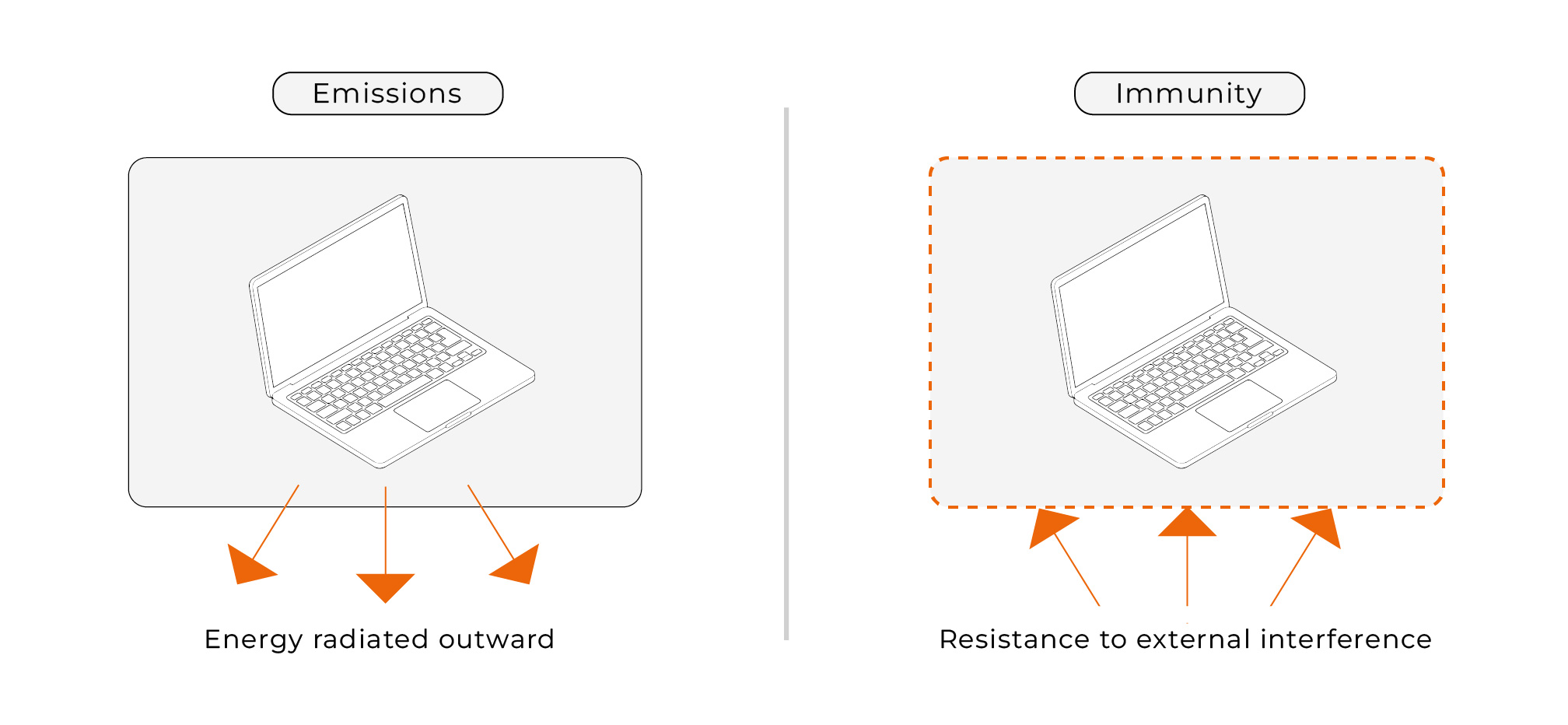
Electromagnetic Compatibility (EMC) is the capacity of electronic devices to function reliably within their environment, without generating disruptive electromagnetic emissions or succumbing to external interference.
It comprises two key dimensions:
- Emissions, referring to the electromagnetic disturbances a device produces, and
- Immunity, which denotes its resilience against ambient electromagnetic noise.
Ensuring regulatory compliance is vital for maintaining harmonious operation among devices—especially in environments saturated with electronic equipment—by minimizing mutual interference and safeguarding performance.
Understanding Electromagnetic Interference (EMI) - EMI and RFI
What Is EMI?
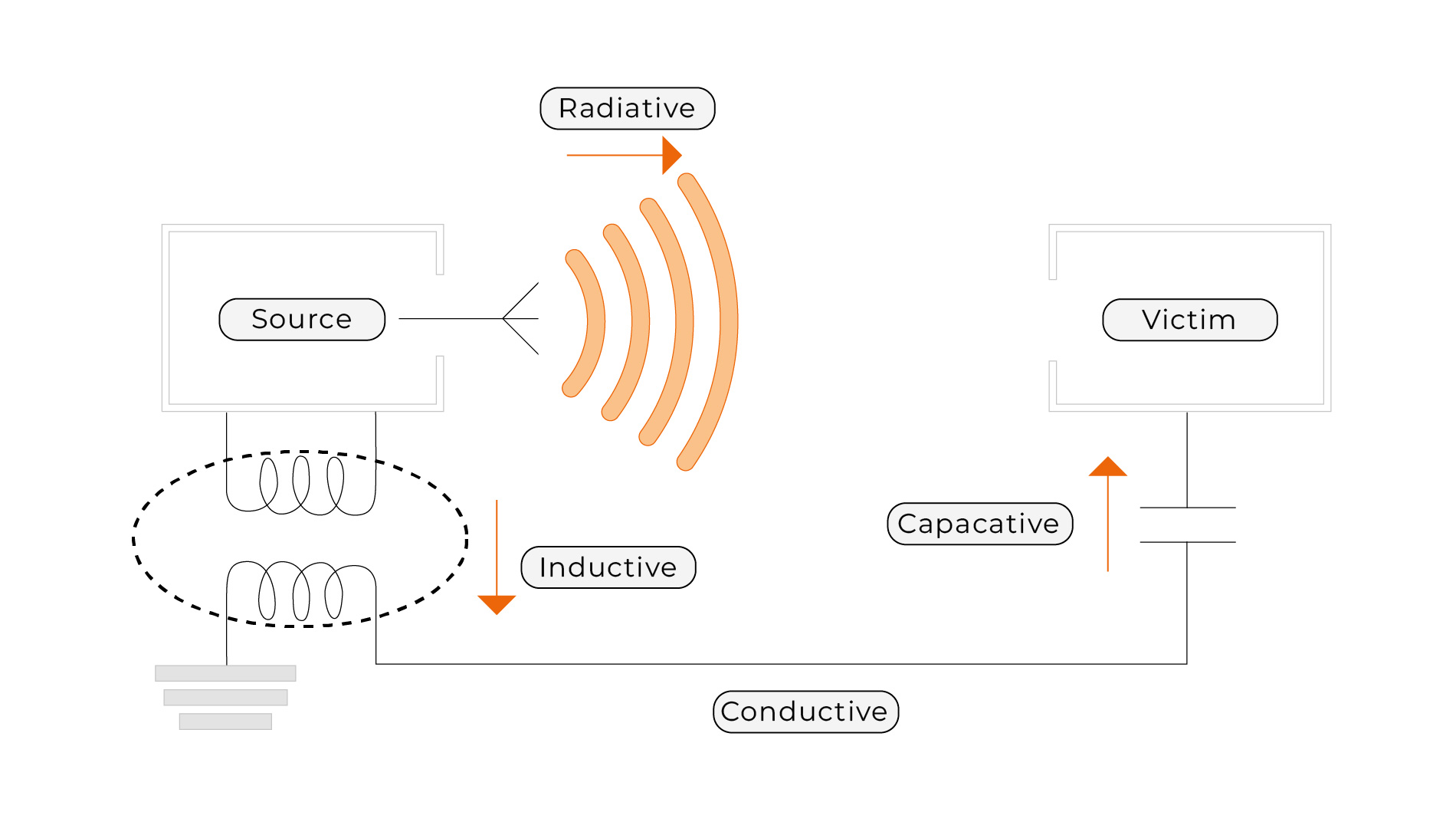
Electromagnetic Interference (EMI) refers to any unwanted electrical or electromagnetic energy present within a system. EMI can originate from multiple sources and affect device performance in various ways:
- External interference - Conducted or coupled into the system from outside sources
- Internal interference (self-interference) - Generated within the device itself
- Emitted interference - Transmitted from the device to other systems through conduction, coupling, or radiation
Natural Sources of EMI
Nature generates electromagnetic disturbances that can disrupt electronic systems:
- Solar flares and coronal mass ejections - Cause auroras and can affect satellites and power grids
- Lightning strikes - Produce intense electromagnetic pulses
- Static electricity - Common in dry environments, can damage sensitive components
- Other atmospheric phenomena - Including geomagnetic storms
Man-Made Sources of EMI
Human technology creates the majority of EMI in modern environments:
- Telecommunications and broadcast equipment - Radio towers, cellular base stations, TV transmitters
- Radar systems - Both civilian (air traffic control, weather) and military applications
- Electrical power infrastructure - Power lines, transformers, substations
- Engines and electric motors - Generate EMI through arcing and switching circuits
What is Radio Frequency Interference (RFI)?
RFI Definition and Scope
Radio Frequency Interference (RFI) is a subset of EMI that specifically impacts radio frequency systems, such as communication and sensing technologies.
The International Telecommunication Union (ITU) defines RFI as the effect of unwanted energy—via emissions, radiation, or induction—that degrades performance or causes data loss in radio systems.
Systems Vulnerable to RFI - RFI is particularly concerning for:
Public Safety Communications
- Land Mobile Radio (LMR) systems
- LTE public safety networks
- Emergency dispatch systems
Wireless Technologies
- Bluetooth devices
- Wi-Fi networks (2.4 GHz and 5 GHz)
- Zigbee and other IoT protocols
Navigation Systems
- GPS and other GNSS networks (GLONASS, Galileo, BeiDou)
- Aviation and maritime positioning
Sources of RFI
Intentional Sources:
- Jamming devices
- Misconfigured radios operating on wrong frequencies
Unintentional Sources:
- Outdated or poorly designed electronics
- Faulty signal boosters
- High-voltage lighting systems (neon signs, LED drivers with poor EMC design)
- Industrial equipment (arc welders, switching power supplies)
Why Do EMC Standards Matter?
 The Dual Purpose of Electromagnetic Compatibility
EMC standards ensure that electronic systems achieve two critical objectives:
1. Emission Control
Limit emissions within defined frequency and power thresholds to prevent devices from:
- Interfering with nearby electronics
- Disrupting critical communication systems
- Creating electromagnetic pollution in dense environments
2. Immunity Requirements
Maintain immunity to external electromagnetic phenomena to ensure devices:
- Function properly near radio transmitters and wireless devices
- Withstand power system transients and surges
- Resist electrostatic discharge events
- Operate reliably with conducted disturbances on power lines
Why Standards and Certification are Essential
These standards are crucial for maintaining safe, interference-free environments—especially where electronic density is high (hospitals, data centers, aircraft, industrial facilities). Without EMC certification, users and consumers have no reliable way to assess whether a device meets legal and operational requirements for a given region.
EMC Testing and Certification Explained
 What Is EMC Testing?
EMC testing involves subjecting a device to rigorous evaluations to verify compliance with regional or international EMC standards. Testing is conducted in specialized facilities using calibrated equipment.
Two Core Test Categories
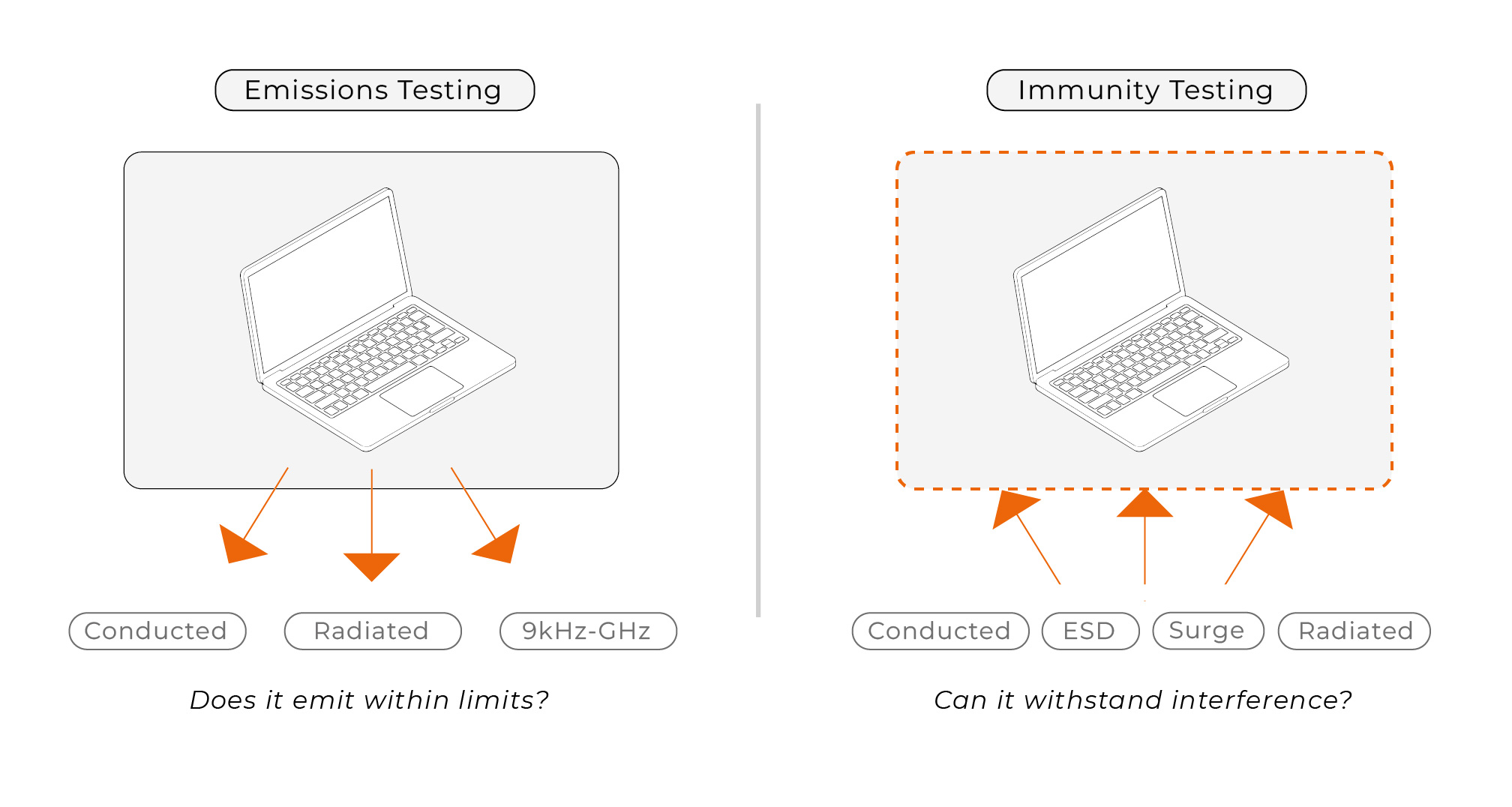
1. Emissions Testing
Question answered: Does the device emit electromagnetic energy within acceptable limits?
- Conducted emissions - Measured on power and signal cables
- Radiated emissions - Assessed in anechoic chambers using calibrated antennas
- Frequency coverage - Typically 9 kHz to several GHz depending on product type
2. Immunity Testing
Question answered: Can the device function properly when exposed to external interference?
- Radiated immunity - Exposure to electromagnetic fields at various frequencies
- Conducted immunity - Injection of disturbances onto power and signal ports
- Electrostatic discharge (ESD) - Simulating static electricity events
- Surge and transient testing - High-energy events from lightning and switching
EMC certification is essential to ensure that electronic devices operate reliably without causing or suffering from electromagnetic interference, thereby guaranteeing safety, compliance with regulations, and seamless interoperability in shared electromagnetic environments.
EMC Certification Marks
Devices that pass EMC testing receive certification, often marked by official insignia:
Region | Mark | Authority |
European Union | CE marking | European Commission |
United States | FCC logo | Federal Communications Commission |
Canada | IC certification | Innovation, Science and Economic Development |
China | CCC mark | SAMR/MIIT |
Japan | VCCI mark | Voluntary Control Council for Interference |
Australia/New Zealand | RCM mark | ACMA/RSM |
This certification is typically required for legal sale and operation in specific markets.
The challenge: Low first-time pass rates
Due to the complexity of EMC requirements, first-time pass rates can be low—often around or below 50%. Common reasons for failure include:
- Inadequate pre-compliance testing during design
- Poor grounding and shielding implementation
- Insufficient filtering on power and signal interfaces
- PCB layout and routing issues
- Unexpected cable resonances
This high failure rate highlights the importance of thorough design and pre-compliance testing throughout the product development cycle.
Frequently Asked Questions
What does electromagnetic compatibility mean?
Electromagnetic compatibility (EMC) is the ability of electronic devices and systems to operate in their intended electromagnetic environment without causing or experiencing unacceptable interference. EMC ensures devices can coexist—they don't emit excessive electromagnetic energy and can withstand external interference.
What's the difference between EMC, EMI, and RFI?
EMC is the overall framework ensuring devices work together without interference. EMI (Electromagnetic Interference) is the unwanted electromagnetic energy itself—the problem EMC aims to solve. RFI (Radio Frequency Interference) is a specific type of EMI affecting radio and wireless communication systems.
Is EMC testing mandatory?
Yes, in most markets. The European Union, United States, Canada, Australia, China, Japan, and most other countries legally require EMC testing and certification before electronic devices can be sold. Exemptions exist only for certain low-risk products or devices used exclusively in controlled industrial settings.
What happens if a product fails EMC testing?
The manufacturer receives a detailed report identifying which requirements weren't met (emissions too high, insufficient immunity, etc.). They must then redesign the product—often improving shielding, filtering, or PCB layout—conduct pre-compliance testing, and resubmit for formal testing. Each retest adds cost and delays market launch.
How long does EMC certification take?
Typical timeline: 2-4 months from initial submission to certificate, including:
- Laboratory scheduling (2-8 weeks wait)
- Testing execution (1 day to 2 weeks depending on complexity)
- Report generation (1-2 weeks)
Pre-compliance testing during development adds 1-4 weeks but significantly improves first-time pass rates.
What are the most common EMC failures?
The most frequent issues are:
- Conducted emissions on power cables exceeding limits
- Radiated emissions in specific frequency ranges
- Immunity failures causing malfunction during radiated field tests
- Electrostatic discharge (ESD) problems on user-accessible interfaces
- Unexpected resonances in cables or enclosures
Can EMC testing be done in-house?
Pre-compliance testing can be performed in-house with appropriate equipment, but formal certification requires testing by accredited third-party laboratories. In-house testing during development helps identify issues early and improves success rates at formal certification.
Do I need different EMC tests for different countries?
Often yes, because standards vary by region. However, many countries accept test reports from accredited foreign laboratories. The key differences are:
- Europe (CE) - Primarily uses IEC/CISPR standards
- United States (FCC) - Part 15 and Part 18 requirements
- Other regions - Often based on international standards with local variations
Designing to meet the most stringent standard can ease multi-market compliance.
Key Takeaways for Manufacturers
To successfully achieve electromagnetic compatibility:
✓ Integrate EMC from initial design - Don't treat it as a final-stage test
✓ Conduct pre-compliance testing - Identify issues early when fixes are cheaper
✓ Understand your target markets - Research specific EMC requirements for each region
✓ Budget for testing and potential redesigns - First-time failures are common
✓ Consider expert consultation - EMC specialists can review designs and troubleshoot failures
Understanding electromagnetic compatibility is essential for bringing compliant, interference-free products to market successfully.
Topic overview